---
title: "Wise Money: The Stock Market Is Not the Economy — Quarry Hill Advisors"
description: Markets price the future, not the present. Here’s why geopolitics and economic headlines don’t always move stocks the way investors expect.
image: https://quarryhilladvisors.com/hubfs/pexels-anna-nekrashevich-6801636.jpg
---
[Skip to content](https://quarryhilladvisors.com/blog/wise-money-the-stock-market-is-not-the-economy-quarry-hill-advisors#main-content)
[](https://quarryhilladvisors.com/)
- Who We Help
Show submenu for Who We Help
- [Corporate Executives](https://quarryhilladvisors.com/corporate-executives)
- [Retirees](https://quarryhilladvisors.com/retirement-planning)
- [Business Owners](https://quarryhilladvisors.com/business-owners)
- [What We Do](https://quarryhilladvisors.com/what-we-do)
- [Our Team](https://quarryhilladvisors.com/our-team)
- Resources
Show submenu for Resources
- [Blog](https://quarryhilladvisors.com/blog)
- [Resource Center](https://quarryhilladvisors.com/resource-center)
- [Client Hub](https://quarryhilladvisors.com/client-resources)
- [Getting Started](https://quarryhilladvisors.com/getting-started)
- Who We Help
Show submenu for Who We Help
- [Corporate Executives](https://quarryhilladvisors.com/corporate-executives)
- [Retirees](https://quarryhilladvisors.com/retirement-planning)
- [Business Owners](https://quarryhilladvisors.com/business-owners)
- [What We Do](https://quarryhilladvisors.com/what-we-do)
- [Our Team](https://quarryhilladvisors.com/our-team)
- Resources
Show submenu for Resources
- [Blog](https://quarryhilladvisors.com/blog)
- [Resource Center](https://quarryhilladvisors.com/resource-center)
- [Client Hub](https://quarryhilladvisors.com/client-resources)
- [Getting Started](https://quarryhilladvisors.com/getting-started)
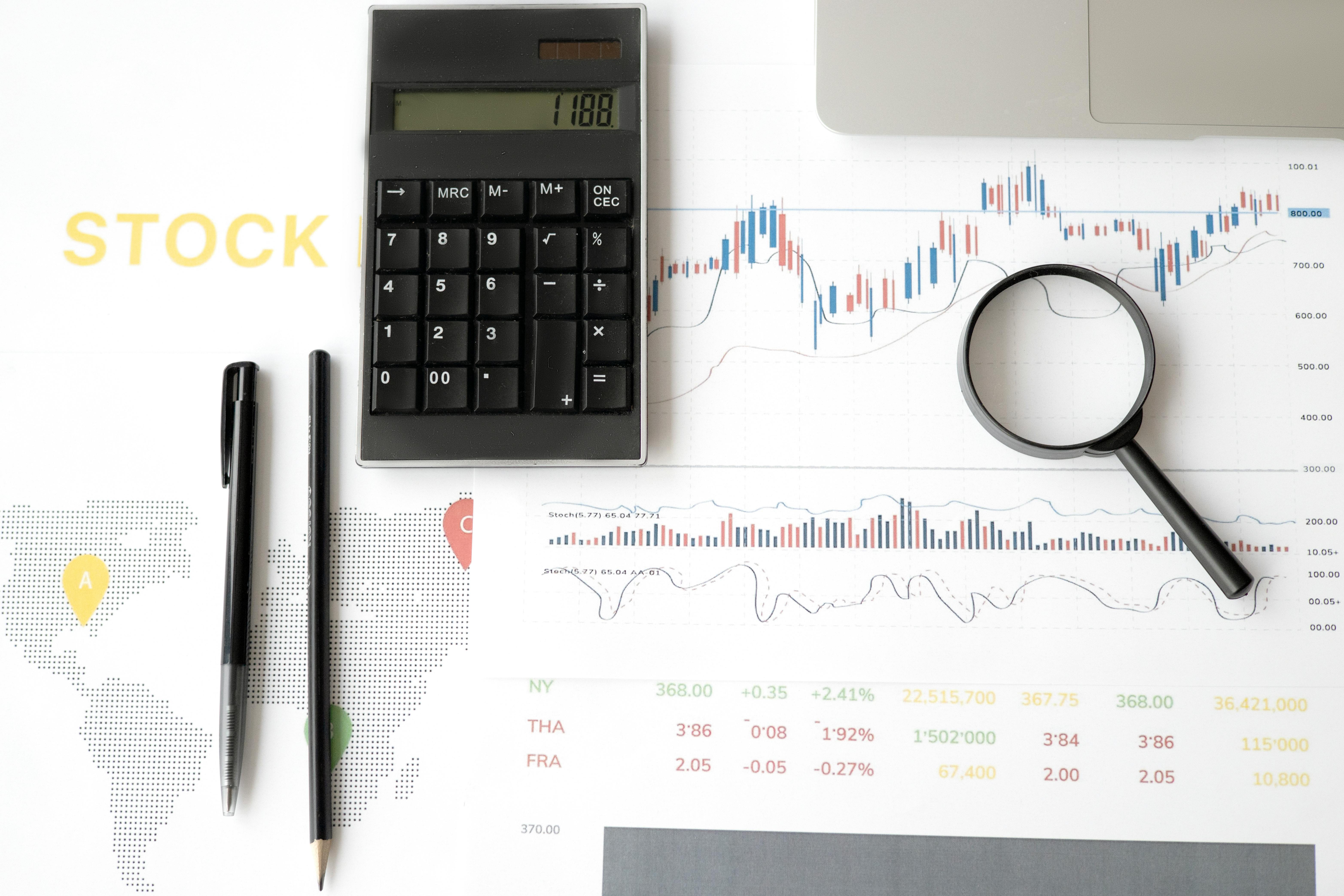
# Wise Money: The Stock Market Is Not the Economy
5.4.2026 | 2 min read
[Kyle Moore CFP®](https://quarryhilladvisors.com/blog/author/kyle-moore)
## Quote to Ponder
*"In the short run, the market is a voting machine, but in the long run, it is a weighing machine."*
**— Benjamin Buffett**
## Recommended Links
- - - - [SpaceX and OpenAI: The Mega IPO Grift](https://www.youtube.com/watch?v=iOyFja87uyw) - Ben Felix, YouTube Video
- [We're in the AI Bubble Now](https://x.com/atmoio/status/2045251771639968182?s=46) - *Mo* on X
- [The Equity Housing Market](https://x.com/thegeorgepu/status/2048857756749218100?s=46) - *George Pu* on X
- [Lessons From 50 Years in Markets](https://overcast.fm/+ABA27ut8ffU) - *Paul Tudor Jones* and *Patrick O'Shaughnessy* on *Invest with the Best* Podcast
## Recent Content From Quarry Hill
If you’ve been following along on social, you may have seen some of our new videos and resources. Here are a couple of our recent favorites:
## A note from Kyle Moore, CFP®
The Stock Market Is Not the Economy. And It’s Definitely Not Geopolitics.
One of the most common mistakes investors make is treating three very different things as if they’re the same:
The stock market. The economy. And Geopolitics.
They certainly influence one another, but they’re not the same. And when people blur them together, they make bad investment decisions.
When geopolitical tensions rise, war starts, or tariffs are imposed, it feels like markets should fall.
And often they do for a time.
We saw that recently with tariff announcements and escalating conflict with Iran. Markets dipped.
But the more interesting part is what happened next:
The market didn’t stay down.
It recovered and moved much higher.
That feels backward. War headlines and rising markets don’t seem like they should coexist.
But nothing is broken. You’re just looking at three different systems and expecting them to move in sync.
The economy is what’s happening right now: jobs, spending, growth, inflation.
The stock market is what investors think will happen in the future.
That’s a big difference.
Markets are constantly asking what earnings will look like 6–12 months from now, not how things feel today.
That’s why markets often fall before recessions and recover before the economy improves.
Geopolitics is messy with wars, tariffs, elections, and policy changes in play.
The market doesn’t ignore these things. But it filters them through a very specific lens: how will this impact future corporate earnings?
So even when the headlines feel chaotic, the market is asking whether any of it actually changes the long-term path.
Usually, the answer is no.
Another piece people miss: markets don’t just react, they adjust quickly.
New information gets priced in fast. Once something is known, it’s no longer a surprise.
That’s why you can see sharp declines followed by equally sharp recoveries. The uncertainty gets resolved, even if the situation itself isn’t.
Here’s the part that trips people up:
You can be right about geopolitics.
You can be right about the economy.
And still be wrong about the market.
Because the market isn’t reacting to what’s happening. It’s reacting to what was expected versus what actually occurs.
A simple way to think about it:
Geopolitics is the story.
The economy is the current reality.
The stock market is expectations about the future.
This matters because if you tie your investment decisions to headlines, you’ll end up reacting at the wrong times.
You’ll sell when things feel uncertain.
You’ll wait for clarity that never comes.
And you’ll miss recoveries that happen before things feel better.
Through wars, recessions, and political uncertainty, the stock market has remained the most powerful wealth-building engine ever created…but only for those who have stayed the course.
*This material is intended for educational purposes only. You should always consult a financial, tax, or legal professional familiar with your unique circumstances before making any financial decisions. Nothing contained in the material constitutes a recommendation for purchase or sale of any security, investment advisory services or tax advice. The information and opinions expressed in the linked articles are from third parties, and while they are deemed reliable, we cannot guarantee their accuracy*
Share:
[](https://www.facebook.com/sharer/sharer.php?u=https://quarryhilladvisors.com/blog/wise-money-the-stock-market-is-not-the-economy-quarry-hill-advisors) [](https://twitter.com/share?url=https://quarryhilladvisors.com/blog/wise-money-the-stock-market-is-not-the-economy-quarry-hill-advisors) [](https://www.linkedin.com/sharing/share-offsite/?url=https://quarryhilladvisors.com/blog/wise-money-the-stock-market-is-not-the-economy-quarry-hill-advisors)

[Kyle Moore CFP®](https://quarryhilladvisors.com/blog/author/kyle-moore)
[Previous Article](https://quarryhilladvisors.com/blog/q1-2026-market-commentary-quarry-hill-advisors) [](https://quarryhilladvisors.com/blog) [Next Article](https://quarryhilladvisors.com/blog/wise-money-raising-financially-responsible-children)

#### Address
550 Vandalia St.,
Suite 311, Saint
Paul, MN 55114
#### Phone
612.440.0318
#### Email
[info@quarryhilladvisors.com](mailto:info@quarryhilladvisors.com)
- [What We Do](https://quarryhilladvisors.com/what-we-do)
- [Our Team](https://quarryhilladvisors.com/our-team)
- [Blog](https://quarryhilladvisors.com/blog)
- [Resource Center](https://quarryhilladvisors.com/resource-center)
- [Client Hub](https://quarryhilladvisors.com/client-resources)
- [Contact Us](https://quarryhilladvisors.com/contact-us)
- [What We Do](https://quarryhilladvisors.com/what-we-do)
- [Our Team](https://quarryhilladvisors.com/our-team)
- [Blog](https://quarryhilladvisors.com/blog)
- [Resource Center](https://quarryhilladvisors.com/resource-center)
- [Client Hub](https://quarryhilladvisors.com/client-resources)
- [Contact Us](https://quarryhilladvisors.com/contact-us)
Quarry Hill Advisors is a Minnesota-based Investment Advisory Firm registered with the Securities and Exchange Commission (SEC). Registration of an investment advisor does not imply a certain level of skill or training.
© 2026 Quarry Hill Advisors. All rights reserved.
[Privacy Policy](https://quarryhilladvisors.com/hubfs/footer-links/QHA_PrivacyNotice_071625.pdf) [Form ADV Part 2A](https://quarryhilladvisors.com/hubfs/footer-links/QHA_FormADVPart2A_071625.pdf) [Form CRS](https://quarryhilladvisors.com/hubfs/footer-links/QHA_CRS_071625.pdf) [Disclosure](https://quarryhilladvisors.com/disclosure)
```json
{
"@context" : "https://schema.org",
"@type" : "BlogPosting",
"author" : {
"@type" : "Person",
"name" : "Kyle Moore CFP®",
"url" : "https://quarryhilladvisors.com/blog/author/kyle-moore"
},
"dateModified" : "2026-05-04T17:19:07.672Z",
"datePublished" : "2026-05-04T17:19:07.000Z",
"headline" : "Wise Money: The Stock Market Is Not the Economy — Quarry Hill Advisors",
"image" : [ "https://quarryhilladvisors.com/hubfs/pexels-anna-nekrashevich-6801636.jpg" ],
"mainEntityOfPage" : {
"@id" : "https://quarryhilladvisors.com/blog/wise-money-the-stock-market-is-not-the-economy-quarry-hill-advisors",
"@type" : "WebPage"
},
"publisher" : {
"@type" : "Organization",
"logo" : {
"@type" : "ImageObject",
"url" : "https://quarryhilladvisors.com/hubfs/theme/quarry_hill_logo_main_hor.svg"
}
}
}
```